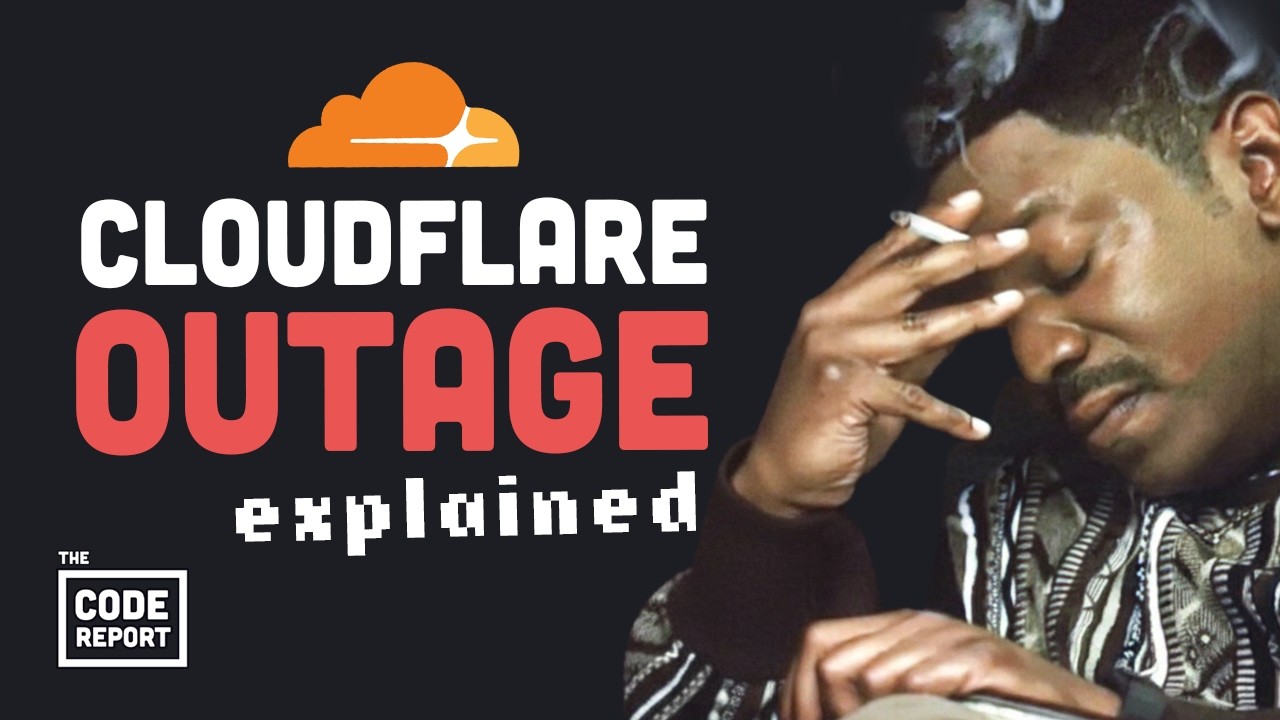
00:03:10
Cloudflare Outage Reveals Fragility of Modern Internet Infrastructure
On November 19, 2025, a widespread internet outage caused significant disruptions globally, highlighting the inherent vulnerabilities of our increasingly centralized web infrastructure.
The Outage Timeline
The incident began around 6:00 AM Eastern Time when Cloudflare, a critical provider of DNS hosting, DDoS protection, and bot mitigation services for millions of websites, experienced severe system-wide issues. Described by Cloudflare as "internal service degradation," the failure rapidly cascaded across their global network.
Within minutes, major platforms including X (formerly Twitter), OpenAI's ChatGPT, and even Down Detector became inaccessible, displaying Cloudflare error pages. The disruption extended beyond typical web services, affecting online gaming platforms like League of Legends and severely limiting access to Cloudflare's own status page.
Identifying the Root Cause
Initial speculation ranged from cyberattacks to configuration errors. However, Cloudflare's technical investigation revealed a more systemic issue:
Configuration File Overload: A routine configuration change triggered a latent bug in their bot mitigation system. This caused a critical configuration file – designed to manage threat traffic – to grow beyond its expected size limit.
Cascading Failure: The oversized file crashed the core software system responsible for handling traffic across multiple Cloudflare services. This single point of failure propagated throughout their network.
Impact Scale: Ironically, the security mechanism intended to protect against external threats caused more widespread disruption than most malicious attacks.
Broader Implications for Internet Resilience
This incident underscores several critical realities about the modern internet:
- Centralization Risks: Despite its distributed origins, core internet services now heavily depend on a handful of major infrastructure providers like Cloudflare, AWS, and Azure. A failure in one can have disproportionate global consequences.
- Complexity Vulnerabilities: Modern cloud systems are incredibly complex. Latent bugs, triggered by seemingly minor changes, can lead to catastrophic failures that are difficult to predict or prevent entirely.
- Single Points of Failure: Services designed for security or efficiency can inadvertently become critical vulnerabilities if they lack robust fail-safes and scalability limits.
Lessons Learned
The November 2025 Cloudflare outage serves as a stark reminder that the internet's backbone remains surprisingly fragile. While providers continuously improve resilience, the concentration of critical services within a few entities creates systemic risk. Ensuring true robustness requires not just technological solutions from providers, but also a broader awareness of infrastructure dependencies and potential mitigation strategies for businesses and users reliant on these essential services.
 Why China's Semiconductor Industry is Confidently Pushing Forward Without Nvidia Chips
 How to Win When AI Changes Everything: Key Insights from Sam Altman
 Unlock Breakthrough Growth: The Peak Performance Equation Revealed
 The Unconventional Genius Behind Linux: Linus Torvalds on Quiet Focus and Engineering Excellence
 How Chinese Colour Theory Revolutionized My Artistic Approach
 Is China Heading Toward a "Lost Decades" Scenario? Deflation, Property Crisis, and Consumer Gloom
 Mastering Social Media Marketing: Your Comprehensive Guide to Building Brands and Boosting Sales
 How to Change Minds: Why Facts Alone Fail and What Actually Works
 Cloudflare Outage Reveals Fragility of Modern Internet Infrastructure
David Heinemeier Hansson: Programming, Ruby on Rails, and Life Beyond Code
Cloudflare Outage Reveals Fragility of Modern Internet Infrastructure
David Heinemeier Hansson: Programming, Ruby on Rails, and Life Beyond Code
 Sam Altman Unveils GPT-5: Capabilities, Future of AI, and Societal Impact

 Building a True MVP: How to Launch Fast and Validate Your Idea
 Inside OpenAI's $500 Billion Stargate: The AI Megafactory Reshaping Tech and Society
 China's Mountain-Split Bridge: Engineering Triumph in Guizhou's Highlands
 Sam Altman Unveils GPT-4's Breakthroughs and AGI Roadmap
 The Xiaomi SU7: A Glimpse of What We're Missing — And Why
 Europe's Strategic Blind Spot: Why China Views the Continent as Invisible
 Does OpenAI's Sora Disrupt Meta? Analyzing the Shift in AI-Driven Content Creation